Shifting your focus away from specific math formulas and test-day anxiety to look at the foundational architecture of the API 570 standard is a smart move. When you understand why the code is written the way it is, guessing on hard questions becomes much more intuitive because you can align your answer with the code’s core intent.
API 570 is built on four core pillars. If you master these conceptual frameworks, the individual tables, paragraphs, and formulas start making perfect sense.
1. Circuitization (Piping Circuits & Corrosion Loops)
A major processing plant can have hundreds of miles of piping. An inspector cannot physically ultrasonic-test every single inch of it. To solve this, API 570 uses the concept of Piping Circuits.
Piping sections are grouped together into a common “Corrosion Loop” if they share the same base metal material and are exposed to the exact same process environment (chemical composition, temperature, velocity, and pressure).
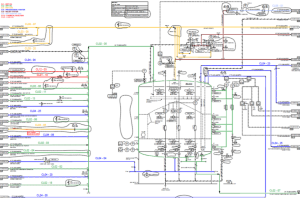
By treating a complex system as distinct circuits, you can place Thickness Measurement Locations (TMLs) at targeted, high-risk points (like dead-legs or the outside radius of elbows where erosion occurs) to accurately represent the health of the entire loop.
2. Predictable Degradation (API 571 Integration)
The code assumes that steel doesn’t just fail randomly; it degrades based on predictable chemical and mechanical interactions. You cannot be an effective inspector if you don’t know what you are hunting for.
API 570 splits damage tracking into two main conceptual buckets:
-
General/Localized Wall Thinning: Linear metal loss over time (e.g., sulfidation, hydrochloric acid corrosion). This is what you track using your short-term and long-term corrosion rate calculations to establish remaining life.
-
Environmental Cracking: Mechanical or metallurgical failures that do not thin the pipe wall, but cause sudden structural cracking (e.g., Stress Corrosion Cracking, Hydrogen Induced Cracking). These require specialized non-destructive testing ($NDT$) methods like magnetic particle or eddy current testing rather than basic thickness checks.
3. The Core Safety Lifecycle Loop
The operational mechanics of API 570 move through an endless structural loop designed to keep volatile fluids contained. The logic always follows this exact path:
Actual Thickness —- Calculate Corrosion Rate —– Remaining Life —— Next Inspection Date
If a system’s remaining life drops below a critical point where $t_{\text{actual}}$ approaches the absolute minimum design thickness ($t_{\text{min}}$), the cycle triggers a mandatory operational pivot: either repair the pipe, replace it, alter the process conditions, or perform a rigorous API 579 Fitness-for-Service engineering evaluation.
4. Division of Responsibility (Who Holds the Power?)
API 570 draws distinct regulatory boundaries between the roles on an active job site. A common trap is assuming the Authorized Piping Inspector has the final say on every single technical decision.
Role |
Ultimate Authority Boundaries |
Authorized Inspector |
Responsible for visual evaluations, signing off on routine repairs, verifying NDT examiner qualifications, and setting inspection intervals. |
Piping Engineer |
Must be consulted for structural design changes, rerating a system to a higher pressure, or designing complex, non-routine weld repairs. |
Repair Organization |
The execution arm (often a mechanical contractor) responsible for physically doing the welding and maintaining code-compliant quality control records. |
Core Concept Takeaway: The Inspector is the gatekeeper of safety and documentation, but they are not a structural engineer. Whenever a calculation modifies the baseline pressure design or structural geometry of the system, the code demands that a Piping Engineer signs off.
Here’s a clear concept understanding of API 570 (Piping Inspection Code) so you actually think like the exam expects, not just memorize.
This is based on American Petroleum Institute API 570 principles.
🧠 API 570 – CORE CONCEPT UNDERSTANDING
🔥 1. What API 570 actually is
API 570 is a fitness-for-service inspection code for piping systems in pressure service.
👉 It answers:
- Is piping still safe to operate?
- How fast is it degrading?
- When should we inspect again?
- What needs repair or replacement?
⚙️ 2. BIG IDEA (MOST IMPORTANT)
API 570 is NOT about inspection.
It is about:
Managing risk through inspection data
🧠 3. CORE ENGINEERING MODEL
Everything reduces to:
Risk=Probability×Consequence
✔ Probability of Failure (PoF)
Depends on:
- corrosion
- erosion
- fatigue
- operating conditions
- maintenance quality
✔ Consequence of Failure (CoF)
Depends on:
- safety impact
- environmental damage
- economic loss
- system criticality
🔴 4. KEY INSPECTION CONCEPT
Inspection does NOT remove risk.
👉 It only:
✔ detects damage
✔ updates data
✔ reduces uncertainty
📉 5. CORROSION CONCEPT (CORE EXAM TOPIC)
Corrosion Rate (CR)
- measures speed of metal loss
- based on thickness change over time
Remaining Life (RL)
- how long equipment can safely operate
👉 Relationship:
- higher CR → lower RL
- lower thickness → lower RL
🧪 6. INSPECTION FREQUENCY LOGIC
Inspection interval is based on:
✔ Remaining life
✔ Risk level
✔ Code limits
👉 Typical rule:
- Interval ≈ ½ Remaining Life
BUT:
- high consequence → more frequent inspection
- code limits always apply
⚠️ 7. CRITICAL THINKING RULES
API 570 expects conservative engineering thinking:
✔ Use worst-case thickness
✔ Use highest corrosion rate
✔ Use most conservative assumption when uncertain
🔍 8. CONDITION ≠ SAFETY
Common exam trap:
❌ “Looks good → safe”
✔ Reality:
- internal corrosion may exist
- hidden degradation matters
🧱 9. WHAT API 570 REALLY CONTROLS
It governs:
✔ Inspection planning
✔ Corrosion monitoring
✔ Repair decisions
✔ Fitness-for-service decisions
✔ Documentation and records
🧠 10. DECISION FLOW (HOW QUESTIONS WORK)
Every question secretly follows:
- What is PoF?
- What is CoF?
- What data is available?
- What is the safest action?
🔥 11. EXAM THINKING MODEL
When solving any question, think:
✔ Identify thickness / corrosion
✔ Calculate risk trend
✔ Decide inspection or action
✔ Choose conservative answer
🚨 12. MOST IMPORTANT CONCEPT SUMMARY
If you remember ONLY this:
- API 570 = risk-based piping integrity management
- Inspection = data collection, not safety guarantee
- Decisions = always conservative
- Risk = PoF × CoF
🏁 FINAL UNDERSTANDING
API 570 is not a memorization exam.
It is a decision-making exam under uncertainty.
👉 Those who pass:
-
think in risk
-
avoid assumptions
-
choose conservative actions
-
follow code logic
want to know more? study our free lessons and quiz at:
API 570 Piping Inspector Online Training Course