To pass the API 570 exam, your study strategy must prioritize the exact operational parameters and boundaries where the exam writers love to hide their test questions.
1. High-Yield Boundaries & Limits (Memorize These)
API 570 relies heavily on exact measurements to define inspection zones. Questions on these boundaries appear in both the closed-book and open-book sections.
Injection Points
This is a massive source of easy points on the exam. You must know exactly where an injection point circuit begins and ends.
-
Upstream Boundary: 3 times the pipe diameter ($3D$) or 12 inches, whichever is greater.
-
Downstream Boundary: The second change in process direction (the second elbow) or 25 feet, whichever is lesser.
Soil-to-Air Interfaces
For piping buried underground that transitions to aboveground, the inspection zone typically covers 12 inches below the grade surface to 6 inches above the surface. This is a primary zone for localized corrosion due to moisture retention.
2. Piping Service Classifications (The High-Frequency Table)
You will inevitably get a scenario asking you to categorize a piping system or determine its maximum inspection interval based on its service class. Memorize the core distinctions of Class 1 through Class 4:
Class |
Fluid Characteristics / Risks |
Examples |
Max Visual Inspection Interval |
Class 1 |
High flammable/toxic hazard. Immediate risk to life/environment if a release occurs. |
Anhydrous hydrogen chloride, hydrogen sulfide, piping over water. |
5 Years |
Class 2 |
Majority of process piping. Flammable but lower risk of immediate vaporization. |
Hydrocarbons that won’t flash at ambient conditions, hydrogen gas. |
5 Years |
Class 3 |
Non-flammable, non-toxic fluids. Low consequence of failure. |
Distillates, paper pulp streams, most steam lines. |
10 Years |
Class 4 |
Services that are non-toxic, non-flammable, and completely benign. |
Utility water, plant air, cooling water. |
Optional / Exempt
|
3. The Core Calculations to Master
Do not get intimidated by the ASME B31.3 codebook. For the open-book section, you only need to know how to navigate to the Pressure Design of Components (typically Section 304).
Piping Minimum Thickness (t min)
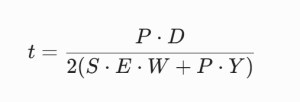
The required thickness for a straight pipe under internal pressure is calculated using the classic ASME B31.3 formula:
-
P = Internal design gauge pressure
-
D = Outside diameter of the pipe
-
S = Allowable stress value from ASME B31.3 Table A-1
-
E = Quality factor / joint efficiency (Table A-1A or A-1B)
-
W = Weld joint strength reduction factor
-
Y = Wall thickness coefficient (Table 304.1.1, varies by material and temperature)
Exam Trap: Always ensure you add the mechanical/corrosion allowance (CA)a t this value if the question asks for the minimum ordered or nominal wall thickness (t_m = t + CA).
4. Strategic Study Tactics
-
Filter API RP 571 (Damage Mechanisms): The API 570 Body of Knowledge (BOK) does not require you to learn all of RP 571. It isolates roughly 10 to 14 mechanisms specific to piping (such as CUI, Sulfidation, Erosion/Erosion-Corrosion, and MIC). Focus exclusively on those listed in your current exam window’s BOK.
-
Don’t Over-Study ASME Section IX: Just like in 653, you are not being tested on how to weld. Focus entirely on identifying whether a welding variable change (like a change in P-number, F-number, or preheat requirements) requires a completely new WPS qualification.
-
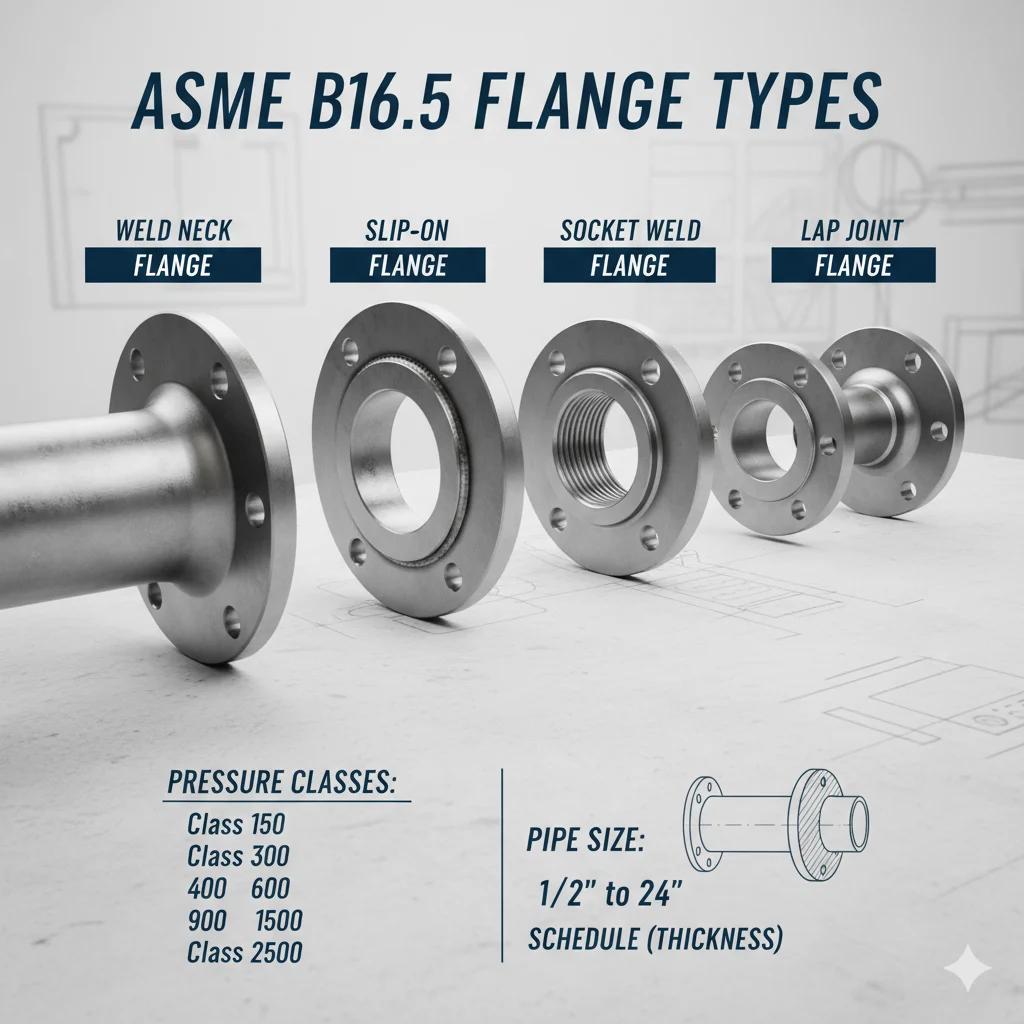
Flange Ratings (ASME B16.5): You will almost certainly get a question asking you to find the pressure-temperature rating or hydrostatic test pressure for a specific flange class (e.g., Class 150, 300, 600). Learn how to read the material group tables in B16.5 quickly.
🧠 1. MASTER THE “BIG 3” CALCULATIONS
You cannot pass without these:
✔ Corrosion Rate (CR)
CR = (Initial − Current) / Time
✔ Remaining Life (RL)
RL = (Current − Minimum) / CR
✔ Inspection Interval
≈ ½ RL (within code limits)
👉 Tip:
- Always use minimum thickness
- Always use highest corrosion rate
🔴 2. THINK “WORST-CASE FIRST”
API 570 is conservative.
When in doubt, choose:
✔ Lower thickness
✔ Higher corrosion rate
✔ Shorter remaining life
⚠️ 3. DON’T TRUST VISUAL INSPECTION
Big trap in exam:
❌ “Looks good = safe”
✔ Reality:
- Must verify with thickness data
- Integrity ≠ appearance
📊 4. KNOW THE RELATIONSHIP (CR → RL → INTERVAL)
👉 If CR ↑
→ RL ↓
→ Interval ↓
👉 If thickness ↓
→ RL ↓
👉 If RL ↓
→ inspection frequency ↑
🔥 5. MEMORIZE CRITICAL CONDITIONS
If:
✔ Current thickness = minimum
👉 Immediate action required
✔ Thickness close to minimum
👉 High risk
✔ Data uncertain
👉 Use conservative assumption
🧪 6. HANDLE TRICK QUESTIONS PROPERLY
When question says:
- “No defects found” → still verify
- “Vendor says OK” → don’t accept blindly
- “No failure history” → not proof of safety
- “Stable corrosion” → still active
👉 Always choose verify / reassess / investigate
📘 7. FOLLOW CODE, NOT OPINION
API 570 is code-driven
✔ Inspection intervals
✔ Acceptance criteria
✔ Repairs
👉 If stuck:
👉 Choose code-compliant answer
⚡ 8. TIME MANAGEMENT STRATEGY
- First pass → answer easy questions
- Mark difficult ones
- Return later
👉 Don’t get stuck on one calculation
🧠 9. UNIT & FORMULA DISCIPLINE
Common failures:
❌ Mixing mm and inches
❌ Forgetting minimum thickness
❌ Using wrong CR
✔ Fix:
- Standardize units first
- Write formula mentally before solving
🎯 10. FINAL EXAM STRATEGY
If confused between two answers:
👉 Choose the one that:
✔ Uses conservative logic
✔ Uses worst-case data
✔ Follows code
✔ Ensures safety
🏁 FINAL 10-SECOND REMINDER
Before starting exam:
✔ Use minimum thickness
✔ Use highest CR
✔ RL controls interval
✔ Follow code
✔ Think conservative
🚀 REALITY CHECK
You don’t fail API 570 because it’s hard.
You fail because:
-
You rush
-
You assume
-
You ignore conservative logic
-
<70% → Needs improvement
want to know more? study our free lessons and quiz at:
API 570 Piping Inspector Online Training Course