Important points while preparing for API 570 Piping Inspector Examination
[/vc_column_text][/vc_column][/vc_row]

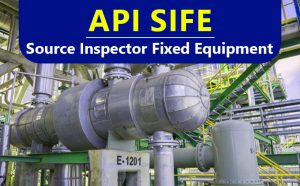
API SIFE is about Quality Surveillance of Fixed equipment.
Fixed equipment covers a large number of equipment such as pressure vessels, piping columns, towers, heat exchangers, storage tanks, valves, etc.
As Inspector, you are part of the package team to ensure that the fixed equipment is built and tested so to meet the minimum requirements of the purchase order and associated standards.
You are representing the end user or client’s team on the ground; having direct contact with the fixed equipment (pressure vessels, boilers, heat exchangers, storage tanks, towers, reactors, and piping systems) manufacturer.
Distinction: Unlike rotating equipment (pumps, compressors), fixed equipment does not have moving parts during operation.
Quality surveillance is a combination of quality assurance, quality control and inspection. So, you should know about Quality plan (QP), Inspection and Test Plan (ITP) which is covered under:
•API Recommended Practice 588, Recommended Practice for Source Inspection and Quality Surveillance of Fixed Equipment
Because exotic materials such as stainless steel, duplex and super duplex used, in order to avoid mix up of material, you should know about Positive Material Identification (PMI) and hence:
• API RP 578, Material Verification Programs for New and Existing Assets
Of course; you should know about the material (Carbon Steel, Stainless Steel, Duplex, Super Duplex), NDT (personnel and Procedure and welding (WPS, PQR, WPQR) and pressure testing of pressurized vessels and piping and hence:
• ASME Section II, Materials
ASNT SNT TC‐1A Personal Qualification and Certification in Nondestructive Testing Personnel
• ASME Section V, Nondestructive Examination
• AWS D1.1, Structural Welding Code- Steel
• ASME Section IX, Welding and Brazing Qualifications
• API Recommended Practice 577, Welding Inspection and Metallurgy
•ASME Section VIII, Rules for Construction of Pressure Vessels
• API Recommended Practice 572, Inspection of Pressure Vessels
• ASME B31.3, Process Piping,
• ASME B16.5 Pipe Flanges and Flanged Fittings,
You know about coating because once the fixed equipment is built and tested, it is coated against corrosion protection and hence:
• SSPC – PA 2 Procedure for Determining Conformance to Dry Coating Thickness Requirements,Surface Preparation Guide (SSPC)
• SSPC‐SP1 Solvent Cleaning
• SSPC‐SP3 Power Tool Cleaning
• SSPC‐SP5 or NACE 1 White Metal Blast Cleaning
• SSPC‐SP6 or NACE 3 Commercial Blast Cleaning
• SSPC‐SP7 or NACE 4 Brush-Off Blast Cleaning
• SSPC‐SP10 or NACE 2 Near-White Blast Cleaning • SSPC‐SP11 Power Tool Cleaning to Bare Metal

The Online training component of our hybrid training includes:
A certificate of achievement worth 40 CPD Credit Hours is issued to all candidates upon completion
